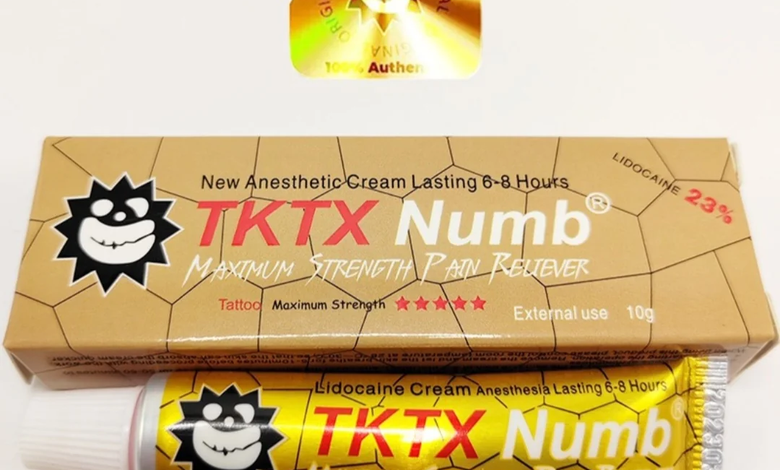
Long tattoo work runs on a clock that most people underestimate. A three hour outline, a six hour shading block, a full day of colour packing. Each of those places different demands on a tattoo numbing cream, and the chemistry inside the tube does not run on the same schedule as the appointment book.
Most preparations sold for tattoo preparation rely on lidocaine, sometimes combined with prilocaine or tetracaine. A tattoo numbing cream interrupts nerve signalling in the upper skin, and that interruption follows a curve rather than a switch. Planning a sitting sensibly means knowing roughly where the rising edge and the falling edge sit.
Why The Clock Starts Before The Needle Does
Absorption sets the pace: Topical anaesthetics have to cross the outermost skin layer before reaching the nerve endings that carry pain messages. That crossing is slow. Depending on formulation and concentration, meaningful numbness usually appears somewhere between twenty and sixty minutes after application, with the strongest effect arriving later still.


Warmth and coverage matter: Covering the treated patch with film raises local skin temperature and stops the product drying out, which speeds absorption. Skin that is cold, dry or heavily calloused absorbs more slowly. Two people applying the same product on the same day can reach the peak effect twenty minutes apart.
See also: Will Banks Use More Blockchain Technology?
What Happens Across A Long Sitting
Once the peak passes, the anaesthetic starts clearing from the tissue. Some formulations combine two anaesthetics as a eutectic mixture, a blend that stays liquid at a lower temperature than either ingredient alone and penetrates skin more readily. Blends of this kind tend to reach useful numbness faster, though speed and duration are separate properties.
Clearance is driven partly by dermal microcirculation, the small blood vessels that carry the anaesthetic away from the treated area. Tattooing itself raises blood flow locally through mechanical irritation, so the product often clears faster during active work than it would on undisturbed skin. Reported duration figures should be read as approximations.
Strength ratings need reading with caution: percentage figures printed on packaging refer to the stated anaesthetic content, not to how long relief lasts or how deep it reaches. A higher number on the label does not extend the working window in any predictable way, and independent testing of imported products has found labelled and measured concentrations that do not match.
Reapplication And Its Boundaries
Artists commonly see clients ask for a second coat once sensation returns. That request needs care rather than a flat yes or no. Total dose across a session, not the amount in any single application, governs how much anaesthetic enters the bloodstream, and larger treated areas raise that total quickly.
Points worth raising before a long booking:
- Manufacturer labelling states a maximum quantity and a maximum treated surface area. Both limits apply to the whole appointment, not to each coat.
- Broken, freshly tattooed or irritated skin absorbs far more than intact skin, so reapplying directly over worked areas differs from the first application.
- Signs of excessive absorption include dizziness, ringing in the ears, a metallic taste, numbness around the mouth and an unusual heartbeat. Any of these warrants stopping and seeking medical attention.
- Children, pregnant clients and anyone taking heart rhythm medication fall outside general guidance and need advice from a doctor or pharmacist first.
- Residual product should be wiped away fully before work resumes, since anaesthetic left sitting on the surface serves no purpose once the barrier is broken.
The Return Of Sensation
Sensation comes back gradually rather than all at once, and the first hour afterwards can feel odd. Tingling, patchy warmth and mild redness are commonly reported and settle without treatment. Persistent pallor, blistering or spreading rash falls outside that pattern and should be assessed by a health professional.
There is no good evidence that correctly applied topical anaesthetic damages healed tattoo results. What does interfere with the work is a client sitting through pain badly, moving, tensing or cutting a session short, which is the practical reason many artists tolerate their use at all.
Regulatory Context In Australia
Lidocaine is a scheduled substance in Australia, and the rules governing supply depend on concentration and presentation. The Therapeutic Goods Administration has raised concerns about unapproved high strength topical anaesthetics sold online, including products with inaccurate labelling and unverified ingredient concentrations.
Anyone buying a topical anaesthetic can check whether it carries an AUST L or AUST R number, which shows inclusion in the Australian Register of Therapeutic Goods. Products without one have not been assessed by the regulator. A pharmacist can confirm whether a given preparation is suitable and legal to supply.
Numbing effect from topical anaesthetics rises, peaks and fades over a few hours, so session length changes the outcome. Total dose across the whole appointment governs safety. Australian buyers should check ARTG listing and seek professional advice before use.
Tattoo appointments get planned around design, placement and artist availability. Pain management deserves the same forward thinking. A short conversation between artist and client about session length, treated area and timing, held before the day rather than during it, tends to produce a calmer sitting than any product used on guesswork. Advice from a doctor or pharmacist should come first for anyone with a medical condition, a skin disorder or a history of reaction to anaesthetics.






2 Comments