A hospital orders twelve medical recliner chairs for its day care unit. Six months later, four of them sit in the blood collection room. Two have quietly moved to the dialysis floor. Nobody planned any of this. Chairs migrate because departments borrow whatever is free, and a recliner on castors is very easy to borrow. So the question worth settling before the next purchase order goes out is a practical one. Which departments can genuinely share seating, and which ones cannot?
Sharing works better than most procurement teams expect. It also fails in ways that quietly drain a budget. Medical recliner chairs are built for a spread of seated treatments, so the overlap is real and useful. Problems start when a chair gets pulled into work nobody specified it for.
The Five Departments That Compete for the Same Recliner
Look at any mid-sized hospital and the same five areas keep reaching for the same chair:


- Infusion and oncology day care
- Dialysis
- Phlebotomy and blood collection
- Blood donation drives
- Post-procedure recovery and observation
Each one seats a patient for a stretch of time. Each one needs the arm accessible, the legs supported, and the back adjustable. On paper they look identical. On the floor they are not.
Where Shared Medical Recliner Seating Actually Works
Start with the easy wins. Phlebotomy, blood donation, and short observation genuinely go well together.
A recliner with swing-away side arms suits all three. The arm clears for a seated blood draw. It clears again when a donor needs to lie back. The same chair handles a patient resting after a minor procedure without any change to the setup.
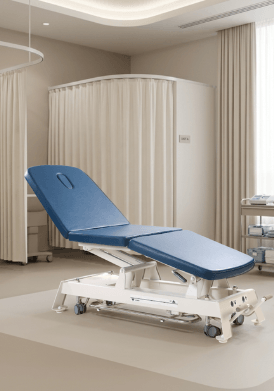
Esthetica Medical Furniture’s medical recliner carries a retractable footrest, an IV pole stand and two fold-down side tables. That combination covers a donation bay in the morning and an observation bay by afternoon. Add 3-inch castors and the chair moves between rooms without a trolley.
Low-volume infusion work fits here too. A clinic running four or five infusion sessions a week does not need a dedicated fleet. Perhaps that sounds obvious, but plenty of small clinics still buy separate chairs for each function and then watch half of them sit idle.
Here is the short version. If the treatments are under two hours and the patient stays seated or lightly reclined, one chair type covers all of them.
Where Shared Seating Breaks Down
Now the harder part. Long-session treatments pull away from the general recliner fast.
Dialysis is the clearest case. Sessions run three to five hours, several times a week, and the chair sits under constant use. Esthetica Medical Furniture’s dialysis chairs are specified differently for that reason. They offer Trendelenburg positioning and a quick-release backrest, which a general recliner does not.
Oncology infusion sits in a similar position. The chemotherapy chair runs on five motors, has programmable memory positions, and has a low access height. Nurses set a position once and recall it from session to session. A handheld remote on a general recliner gets you close, but not to the same repeatable setup.
So the honest answer is a split. Borrow across the short treatments. Buy properly for the long ones.
See also: How Session Length Changes The Results Of Tattoo Numbing Cream
The Cleaning Schedule Decides More Than You Think
This part gets missed almost every time.
A chair shared across three departments is cleaned by three different teams, on three different schedules, with whatever disinfectant each one keeps in the store. Upholstery ages faster under that pattern than under any amount of patient use.
Esthetica Medical Furniture specifies disinfectant-resistant, phthalate-free upholstery for exactly this reason, with colour options across the range. Even so, a shared chair still needs one owner. Somebody has to hold the cleaning record and the service log.
Ask yourself who that person is. If the answer takes more than a few seconds, your shared chairs are probably being cleaned twice a day by one team and skipped entirely by another.
Planning a Mixed Fleet of Medical Recliner Chairs
Space is the other constraint people underestimate. The Esthetica Medical Furniture recliner measures 177 cm in flat bed position and 106 cm wide with side armrests in place. Plan around the flat measurement, not the seated one, because that is the footprint you actually need during a session.
A workable split for a mid-sized facility looks something like this:
- Dedicated dialysis chairs for the renal unit, sized to session load
- Dedicated chemotherapy chairs for oncology day care
- A shared recliner pool covering phlebotomy, donation and recovery
- Two spare recliners held back for overflow.
That last line matters more than it reads. The spare chairs are what stop departments raiding each other.
Next Steps Before You Raise the Purchase Order
Count sessions by department, not by room. A room with six chairs running two sessions a day needs different planning from one running six.
Then check which treatments genuinely need positioning features and which only need a comfortable reclining seat. Buy specialised chairs for the first group. Buy shared recliners for the second.
Most facilities land at roughly sixty per cent shared, forty per cent dedicated. Yours may differ, and that is fine. The point is to decide it deliberately, rather than find out six months later, when four chairs have already walked down the corridor.