Choosing cookware is less about filling your kitchen cabinets and more about finding pieces that suit the way you actually cook. The right cookware can make everyday tasks such as frying, sautéing, simmering, and preparing larger meals easier to manage.
For home cooks considering titum nonstick cookware, it helps to look beyond the word “nonstick” and understand what makes a cookware collection practical for regular use. The shape of each pan, the type of cooking you do, the available sizes, and how easily the pieces fit into your routine can all influence your decision.
The TITUM Fusion collection includes options such as open skillets, a wok with a stick handle and dome lid, and a stock pot with lid. Looking at these pieces by their intended use can help you decide which cookware works best for your kitchen.


What Should You Look for in Nonstick Cookware?
A cookware set should match your cooking habits rather than simply contain the largest number of pieces. Before choosing a set, consider how often you cook, what meals you typically prepare, and which cookware shapes you use most.
Some practical features to consider include:
- Pan shape and size: Different dishes require different cooking surfaces and capacities.
- Cooking versatility: Consider whether you need cookware for frying, sautéing, stir-frying, simmering, or preparing larger portions.
- Handling: Handles and overall pan design matter when moving cookware around the kitchen.
- Lids: A lid can be useful when cooking foods that need to retain moisture or simmer.
- Storage: Think about how the cookware will fit into your cabinets or storage area.
- Daily maintenance: Cookware that fits easily into your normal cleaning routine is more likely to be used regularly.
Rather than choosing based only on the number of pieces included, think about whether each piece has a clear role in your kitchen.
Why Consider TITUM Nonstick Cookware for Everyday Meals?
Nonstick cookware is often chosen for cooking tasks where food is prepared directly on the cooking surface, such as eggs, vegetables, pancakes, or sautéed ingredients. A suitable nonstick pan can also be useful when you want to cook with less sticking and spend less time dealing with residue afterward.
The TITUM Fusion range offers several cookware shapes designed for different cooking tasks. This makes it possible to select individual pieces according to how you prepare meals rather than relying on one pan for everything.
For example, an open skillet can handle everyday stovetop cooking, while a wok provides a different shape and cooking area for stir-frying and other meals. A stock pot is better suited to dishes that require greater capacity.
This type of cookware selection can be particularly useful for households where meals vary from quick breakfasts to larger family dinners.
Choosing the Right TITUM Cookware Pieces
One of the easiest ways to decide what you need is to start with your most frequent cooking tasks.
TITUM Nonstick Open Skillets for Everyday Cooking
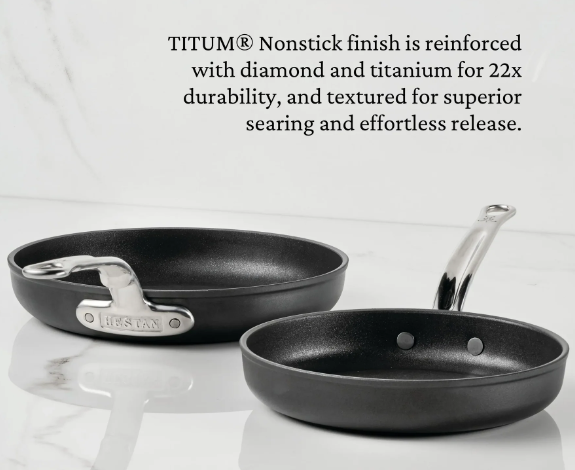
Open skillets are among the most versatile cookware pieces in a kitchen. Their broad cooking surface makes them suitable for tasks such as sautéing vegetables, preparing eggs, cooking proteins, heating leftovers, and making other stovetop dishes.
When selecting a skillet, consider the amount of food you normally prepare. A smaller pan may be convenient for individual portions, while a larger cooking surface can be more practical when preparing meals for several people.
If you frequently cook multiple ingredients at once, the skillet’s available cooking surface becomes especially relevant.
TITUM Nonstick Wok with Stick for Stir-Frying
A wok has a different shape from a conventional skillet, giving it a deeper cooking area. This makes it useful for dishes that involve tossing or stirring several ingredients together.
The TITUM Nonstick Wok with Stick also comes with a dome lid, giving the cookware another option for covered cooking. For households that regularly prepare stir-fries, noodle dishes, vegetable combinations, or other meals involving multiple ingredients, a wok can complement a skillet rather than replace it.
The key consideration is how often you prepare meals that benefit from a deeper, rounded cooking vessel.
TITUM Nonstick Stock Pot with Lid for Larger Meals
A stock pot becomes useful when the quantity of food exceeds what is practical to prepare in a skillet or smaller saucepan. It can be considered for meals such as soups, stews, pasta, sauces, and other dishes that require more capacity.
The TITUM Nonstick Stock Pot with Lid is an 8-quart option, making capacity an important consideration for anyone who regularly prepares larger portions.
A larger pot can also be useful for batch cooking. Instead of preparing several smaller batches, you have more room to cook a larger quantity at once.
Should You Buy a Complete Cookware Set?
A cookware set can make sense when you need several different pieces at the same time. It can provide a coordinated selection for different cooking tasks without requiring you to choose every piece separately.
However, a complete set is not automatically the right choice for every kitchen.
Before buying, consider:
- Which cookware pieces you already own
- Which pieces you use most frequently
- Whether you regularly cook for one, two, or several people
- Whether you need a skillet, wok, stock pot, or a combination
- How much storage space you have available
- Which cooking methods are part of your normal routine
If you already have several suitable pans, adding individual pieces may be more practical than replacing your entire collection.
On the other hand, someone setting up a kitchen from scratch may benefit from choosing cookware that covers several common cooking tasks.
How to Match Cookware to Your Cooking Style
Your cooking routine should guide the final decision.
For quick everyday meals: An open skillet can cover many common stovetop tasks and may be the piece you reach for most often.
For stir-fries and mixed ingredients: A wok provides a different cooking shape that can be useful when tossing and combining ingredients.
For soups and larger portions: A stock pot provides the capacity needed for meals that require more cooking space.
For a varied cooking routine: Combining different cookware shapes can give you more flexibility than relying on one pan for every recipe.
This approach also helps prevent buying cookware that spends most of its time unused.
What Makes a Cookware Collection Practical?
A practical cookware collection is one where the pieces have distinct purposes but can work together as part of the same cooking routine.
For example, you might use a skillet to prepare vegetables or proteins, a wok for a stir-fry, and a stock pot when making a larger meal. The value of having multiple cookware shapes comes from being able to choose the appropriate vessel for the food being prepared.
The TITUM Fusion range includes these different formats, allowing shoppers to consider cookware based on individual cooking requirements.
Rather than asking, “How many pieces do I get?” a better question is, “Which cooking tasks will these pieces help me handle?”
Questions to Ask Before Choosing TITUM Nonstick Cookware
Before purchasing, make a short list of your regular meals and match them to the cookware you need.
Ask yourself:
- How many people do I usually cook for?
- Do I prepare mostly quick meals or larger batch meals?
- How often do I stir-fry or cook dishes that need a wok?
- Do I regularly prepare soups, sauces, pasta, or other larger-volume dishes?
- Which cookware pieces do I already have?
- How much cabinet or storage space is available?
- Would a complete set be more useful than adding individual pieces?
Answering these questions can make the selection process much simpler.
Building a Cookware Collection Around Real Kitchen Needs
The best cookware choice starts with your cooking habits. A nonstick cookware collection should contain pieces that you can see yourself using regularly, rather than cookware selected only because a set contains more items.
With TITUM Fusion, you can consider different cookware formats for different jobs, including open skillets for everyday stovetop cooking, a wok for meals that benefit from a deeper cooking vessel, and an 8-quart stock pot for larger preparations.
For shoppers comparing titum nonstick cookware, focusing on size, shape, capacity, cooking habits, and everyday practicality provides a more useful starting point than simply comparing the number of pieces in a set.
The goal is a cookware collection where every piece has a reason to be in your kitchen and supports the meals you actually prepare.