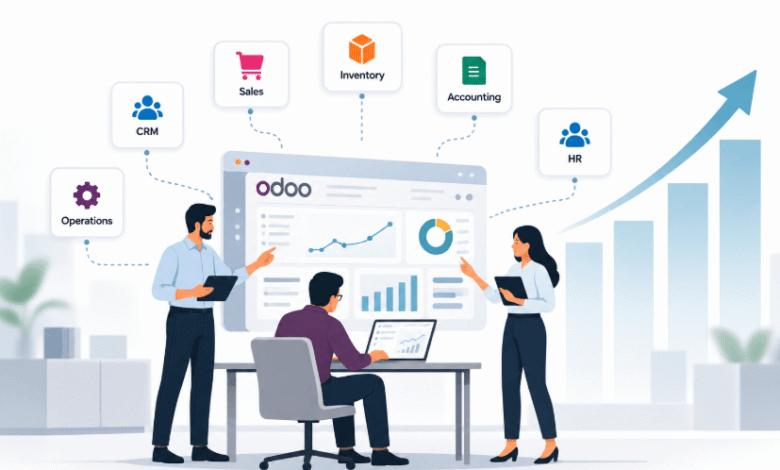
As businesses grow, managing operations across disconnected software systems becomes increasingly complex. Teams often rely on separate applications for accounting, inventory, customer management, and reporting, leading to data silos, duplicated work, and limited visibility into business performance. These challenges can slow decision-making and make it difficult to scale operations efficiently.
Integrated software systems help businesses overcome these challenges by connecting applications, streamlining workflows, and enabling information to flow between departments. However, connecting different platforms requires the right integration approach. Businesses using Odoo ERP, for example, may benefit from Odoo multi-platform integration services to connect their ERP with other business applications and reduce operational silos.
Why Growing Businesses Struggle with Disconnected Software Systems
As businesses expand, they often adopt new software to manage specific functions such as accounting, sales, inventory, and customer relationships. While these tools may work well independently, a lack of integration creates challenges when teams need to share information across departments.


One common problem is data silos. When applications operate separately, employees may need to enter the same information into multiple systems, increasing the risk of errors and inconsistencies. For example, a sales team might update an order in its CRM, while the inventory team relies on a separate system that does not reflect the change immediately.
Disconnected systems can also slow down everyday operations. Employees may spend valuable time transferring data manually, reconciling conflicting records, or requesting updates from other departments. Meanwhile, managers may struggle to obtain an accurate, consolidated view of business performance because information is scattered across different platforms.
These challenges become more significant as transaction volumes increase and teams grow. Without connected workflows and consistent data, businesses can face delays, inefficient resource allocation, and difficulties making informed decisions.
Key Signs Your Business Needs Integrated Software Systems
Recognizing integration problems early helps businesses address inefficiencies before they affect productivity and growth. The following signs indicate that existing software systems may no longer meet your operational needs.
1) Duplicate Data Across Multiple Platforms
When departments use separate applications that do not synchronize information, employees often enter the same data multiple times. Customer details, sales orders, and inventory records may differ across systems, increasing the risk of errors and creating additional work. Integrating business applications helps maintain consistent information and reduces unnecessary data entry.
2) Manual Processes and Repetitive Tasks
If employees regularly transfer information between applications, reconcile records manually, or send updates through emails and spreadsheets, your workflows may lack effective integration. These repetitive tasks consume time that could be spent on higher-value activities. Connected systems can automate routine information exchanges and help teams complete processes more efficiently.
3) Limited Visibility into Business Performance
Disconnected software makes it difficult to consolidate information from different departments. Managers may need to collect reports from multiple sources before evaluating sales, expenses, inventory levels, or operational performance. Integrated systems provide a more consistent view of business data, helping decision-makers identify issues and respond to changing business conditions more effectively.
Benefits of Integrated Software Systems for Growing Businesses
Integrating business applications helps organizations streamline operations, improve information sharing, and manage increasing workloads without introducing unnecessary complexity. Here are four key benefits.
1) Improved Data Accuracy and Accessibility
Integrated systems allow applications to exchange information, reducing duplicate data entry and inconsistencies across departments. Employees can access more reliable, up-to-date records when handling customer orders, tracking inventory, or reviewing financial information. This improves coordination and reduces errors caused by outdated or conflicting data.
2) Greater Operational Efficiency
Connecting business applications reduces the need for manual data transfers and repetitive administrative tasks. For example, when a sales order automatically updates inventory records and triggers the relevant workflow, employees spend less time coordinating activities between departments. These improvements help businesses use their resources more effectively.
3) Better Business Decision-Making
When information is scattered across multiple platforms, managers may struggle to understand overall business performance. Integrated systems bring relevant data together, making it easier to monitor key metrics, identify operational issues, and evaluate business trends. Access to consistent information supports faster, better-informed decisions.
4) Easier Business Scalability
As companies grow, they often add employees, expand product lines, and introduce new applications. Integrated software systems help businesses manage these changes by establishing connected workflows and consistent data exchange. With an appropriate integration strategy, organizations can expand their operations while reducing the complexity of managing multiple software platforms.
How ERP Software Connects Business Operations
Enterprise resource planning (ERP) software helps businesses manage multiple functions through a unified system. Instead of maintaining isolated applications for every department, companies can connect core processes and improve information flow across their operations.
Centralized Management of Finance, Inventory, and Sales
An ERP system brings essential business functions together, allowing departments to work with shared information. For example, when a sales order is confirmed, inventory records can be updated, while the finance team can access relevant transaction details.
This interconnected approach reduces information gaps, improves coordination, and gives managers a more consistent view of business activities. Businesses can also connect their ERP with external applications when they need to retain existing tools or support specialized workflows.
Automated Workflows Across Departments
ERP software can automate routine activities that involve multiple departments. A procurement workflow, for instance, can connect inventory requirements with purchase orders, supplier records, and financial processes. This reduces manual handoffs and helps employees follow consistent procedures.
However, not every business follows the same processes. Some organizations may need to adjust their ERP workflows to accommodate specific approval rules, reporting requirements, or operational practices. Evaluating these requirements before making changes helps businesses avoid unnecessary complexity and maintain efficient workflows.
See also: How Indian Businesses Can Build a Stronger Digital Presence
What to Consider Before Integrating Business Software Systems
Integrating business applications requires more than connecting different tools. Businesses need to evaluate their existing systems, operational requirements, and long-term goals to ensure the integration delivers practical value.
1) Existing Software and Integration Requirements
Start by identifying the applications your business currently uses and how they exchange information. Check whether these systems support integration, what data needs to be shared, and whether existing workflows depend on manual processes. Understanding these requirements helps businesses identify compatibility issues and choose an appropriate integration approach.
2) Business Goals and Scalability
Every integration project should address specific business needs, such as reducing duplicate data entry, improving reporting, or streamlining order processing. Define measurable objectives before selecting a solution. Consider whether the integration can accommodate additional users, applications, and transaction volumes as your business grows.
When standard ERP functionality does not fully support these requirements, businesses may consider Odoo customization services to adapt specific workflows and features to their operational needs. However, customization should address clearly identified business requirements rather than introduce unnecessary complexity.
3) Data Security and Implementation Costs
Connecting applications involves transferring business information between systems, making security an important consideration. Evaluate access controls, data encryption, compliance requirements, and how information will be managed across platforms. Also account for implementation, maintenance, licensing, and potential customization costs to understand the total investment.
Conclusion
As businesses grow, disconnected applications can create operational bottlenecks, data inconsistencies, and unnecessary manual work. Integrated software systems help address these challenges by connecting business processes, improving information flow, and giving teams better visibility into daily operations.
The key is to choose an integration approach that aligns with current business requirements while allowing room for future growth. Evaluating existing applications, defining clear objectives, and planning for scalability can help businesses build a more connected technology environment. Selecting the right Odoo ERP implementation company can help businesses configure their ERP around operational requirements, connect essential processes, and establish a foundation for sustainable growth.