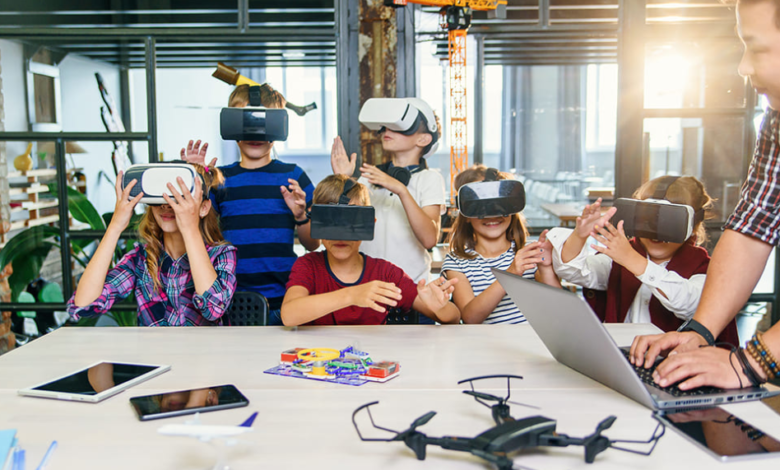
The future of mixed reality blends real and virtual spaces to form adaptive workflows backed by data. Devices become lighter, more wireless, and capable of persistent sensing. Teams collaborate in context-rich environments guided by continuous feedback and analytics. Standards and privacy governance will shape trust and scalability, enabling diverse industries to experiment responsibly. The implications for work, learning, and governance are profound, yet the path remains unsettled, inviting closer scrutiny of how these ecosystems will actually unfold.
What Is Mixed Reality Today and Why It Matters
Mixed reality today stands at the intersection of the digital and physical layers, blending real-world context with computational overlays to augment perception, collaboration, and decision-making.
The landscape signals a data-driven shift toward immersive interfaces where mixed reality reshapes user experience, enabling adaptive content ecosystems; hardware ergonomics constrain or empower exploration, while precise telemetry guides iterative design and scalable, freedom-infused experimentation.


How MR Will Reshape Work, Learning, and Collaboration
As this evolution advances beyond today’s mixed reality capabilities, workplaces and classrooms increasingly harness perceptual fusion to align collaboration with real-time data streams, enabling teammates to co-create in shared, context-rich environments.
The change portends Future workflows powered by immersive collaboration, where task insight, continuous feedback loops, and adaptive guidance shape decision making, training, and distributed expertise, sustaining autonomous, freedom-respecting innovation.
Overcoming Adoption Hurdles: Tech, Standards, and Privacy
Despite rapid progress, adoption remains constrained by a triad of friction: evolving hardware and software ecosystems, interoperable standards, and pervasive privacy concerns. The analysis projects a trajectory where privacy safeguards evolve into baseline expectations, while interoperability standards coalesce into portable, vendor-agnostic frameworks. Confidence rises as transparent data governance and rigorous metrics illuminate adoption pathways, enabling diverse users to embrace immersive experiences with freedom and trust.
See also: The Future of Mixed Reality
Roads Ahead: Key Opportunities by Industry and Skillset
The future of mixed reality presents distinct, data-informed opportunities across industries and skill sets, with each sector poised to redefine workflows, decision cycles, and customer experiences.
Across domains, immersive pedagogy accelerates learning curves, while industry ready pipelines streamline deployment from prototype to production.
This trajectory supports scalable upskilling, measurable ROI, and a narrative of freedom through empowered, data-driven collaboration.
Frequently Asked Questions
How Will MR Integrate With Traditional 2D Interfaces?
The integration of MR with traditional 2D interfaces will hinge on seamless spatial overlays, adaptive inputs, and contextual bridges, addressing integration challenges while tracking user adoption, performance metrics, and perceived freedom within hybrid work and creative ecosystems.
What Are the Long-Term Environmental Impacts of MR Devices?
Long-term environmental impacts of MR devices hinge on eco conscious design and rigorous lifecycle assessment; projections suggest reduced energy footprints through advanced displays, and material reuse, though improper disposal risks remain—an optimistic, data-driven call for responsible innovation.
Can MR Enhance Creativity Beyond Simulations and Prototypes?
Creativity augmentation emerges as MR reshapes exploration, collaboration, and iteration, extending beyond simulations and prototypes; observers posit cognitive biasusion may paradoxically amplify unconventional insights even as data streams shape taste, risk tolerance, and autonomy in creative teams.
How Will MR Affect Digital Equity and Access Across Regions?
Digital inclusion and regional access will vary; MR could democratize information, yet infrastructure gaps persist. The vision is data-driven leverage of affordable hardware, open networks, and targeted policies to expand equitable access, empowering autonomous, freedom-loving communities worldwide.
What Are the Ethical Implications of Persistent MR Monitoring?
One eye on transparency, another on surveillance; persistent MR monitoring raises privacy erosion and questions of data ownership, as shared realities blur boundaries. Heuristic ethics emerge: autonomy contested, innovation tethered, freedom balanced against collective security and accountability.
Conclusion
In the quiet hum of wireless air, mixed reality threads together desks, minds, and data into a single, living map. Teams co-create in context, unseen analytics guiding every gesture. Privacy and standards stand as gates, encouraging exploration without fear. As devices fade into seamless wearables, frontiers become everyday workflows, and ROI blooms from transparent, inclusive pipelines. The future arrives not as a destination but as a field shaped by imagination, measurement, and trust—where reality learns to collaborate.





3 Comments