Charges Withdrawn, Licence Still at Risk: A Professional Regulation Lawyer in Toronto Explains Why


You walk out of the courthouse, and the charge has been quashed. The Crown withdrew it. Your criminal lawyer shakes your hand, and for a few hours you feel like the whole thing is done and dusted. Then a letter arrives from your college. It refers to the same allegation, the same date, the same complaint. This is the moment most people realize that a professional regulation lawyer in Toronto handles a completely separate problem from the one the criminal court just closed.
The two systems do not talk to each other in the way you might assume. A withdrawal, a stay, even a full acquittal, does not bind your regulator. Your college runs its own process under its own statute, and it can reach its own conclusion about the same events. A professional regulation lawyer in Toronto spends a lot of time explaining that difference to people who thought they were done.
Why a Criminal Acquittal Does Not End a College Investigation
Here is why. The criminal court asks whether the Crown proved guilt beyond a reasonable doubt. That is a high bar, deliberately so, because a conviction can take your liberty.
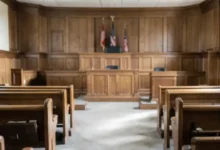

Your college asks something different. Under the Health Professions Procedural Code, a discipline panel decides on a balance of probabilities. That means more likely than not. Roughly speaking, if a panel thinks the allegation is fifty-one percent likely, that is enough.
So the same evidence can fail in one forum and succeed in another. Nothing unfair has happened. The two bodies are answering two different questions.
There is a second point people miss. A Crown withdraws charges for many reasons. Weak identification. A witness who stops cooperating. Resource decisions. Trial delay under section 11(b) of the Charter. None of those reasons amount to a finding that the conduct did not occur, and your college knows that.
What Your Regulator Can Still Do After the Charge Disappears
The college process usually begins with a complaint or a registrar’s investigation. It goes to a screening committee, then possibly to a discipline hearing. At each stage, the possible outcomes are real.
- A caution delivered in person before the committee
- Specified continuing education or remediation
- Terms, conditions, and limits placed on your certificate of registration
- Suspension of your right to practise
- Revocation, which ends your career in that profession
- Costs orders that can run into serious money
Many colleges also publish discipline outcomes on a public register. That entry does not expire the way a criminal record can be suspended. A future employer, a hospital credentialing committee, a regulator in another province- all of them can find it years later.
Think about what that means practically. You could be acquitted in criminal court, keep a clean record, and still lose your ability to earn a living in the field you trained for.
Speaking to a College Investigator Is Not Like Speaking to Police
This part surprises people the most. In a criminal investigation, you have a right to silence. You can decline to answer questions and no adverse inference is drawn at the time of trial.
Your college is not the police. Investigators appointed under the Regulated Health Professions Act have statutory powers to require records and to ask questions. Many statutes and codes of conduct also place a duty on members to cooperate with their regulator.
What you say can then be used in the discipline proceeding. What you write in an explanatory email can also be used. People often send a long, apologetic, unguarded message to their college in the first week, believing it will make the problem go away. It rarely does. Sometimes it becomes the strongest evidence against them.
Next steps matter here. Before you respond to any college correspondence, get advice about what your obligations actually are. Cooperation and self-incrimination are not the same thing, and the line between them is narrower than most people expect.
Timing Problems When Both Matters Run at Once
Sometimes the college moves while the criminal case is still open. That creates a genuine tension. Anything you say to your regulator could find its way into the criminal file.
Colleges will often hold their process until the criminal matter resolves, but that is a request, not a right. In serious cases, a college may impose an interim order suspending you before any hearing takes place. That order can arrive within days.
An experienced professional regulation lawyer in Toronto looks at both files together. The sequencing decisions made in month one shape what is possible in month twelve. Resolving a criminal charge quickly can feel like relief and still leave you worse off with your college, depending on what facts are admitted along the way.
See also: Personal Guarantees and Spousal Signatures: The Clause a Franchise Attorney Flags First
Taken Together
The criminal file and the regulatory file are two separate fights. Winning one tells you almost nothing about the other. Treat them that way from the first letter, and you keep options open that closing your eyes to the second problem quietly takes away.


2 Comments