Moisture content can have a direct influence on material quality, processing stability, and production consistency across many industrial applications. In processes involving hygroscopic plastics, powders, pellets, grains, chemicals, pharmaceuticals, and other moisture-sensitive materials, even relatively small changes in moisture levels can affect the final product. Relying only on periodic laboratory testing can make it difficult to identify changes as they occur during production.
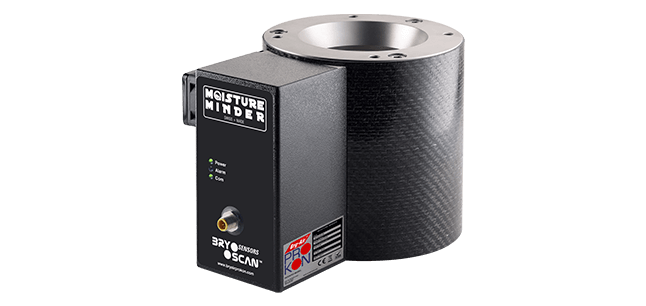
A moisture analyzer can provide continuous information about moisture content directly within the production process. Bry-Air’s Moisture Minder BryScan series is designed for real-time inline measurement of moisture in hygroscopic plastics, including pellets, flakes, and regrind. The system can display moisture content in percentage or parts per million and can be integrated with drying hoppers, silos, material lines, or machine throats.
Real-time measurement changes the way manufacturers approach moisture control. Instead of discovering a moisture-related problem after material has already been processed, operators can monitor conditions during production and respond when readings move outside the required specifications. This can support more consistent quality control, reduce material inconsistencies, and improve the understanding of how drying equipment is performing.


What Challenges Can Uncontrolled Moisture Create?
How Can Moisture Affect Material Quality?
Moisture sensitivity varies considerably between materials. Hygroscopic polymers can absorb moisture from their surroundings, while other materials may have different moisture-related processing characteristics. When moisture levels are outside the required range, the material may behave differently during processing.
In plastic manufacturing, uncontrolled moisture can contribute to processing inconsistencies and defects. The effect depends on the polymer, processing temperature, material condition, and the specific production process. For this reason, manufacturers need reliable measurement rather than relying only on assumptions about whether a material is sufficiently dry.
Why Is Periodic Testing Sometimes Insufficient?
Traditional laboratory testing can provide useful reference measurements, but it introduces a delay between sampling and obtaining the result. During that interval, production conditions may change.
Inline measurement provides a different approach by continuously monitoring material as it moves through the production process. Bry-Air describes Moisture Minder as a system that eliminates the need for time-consuming offline moisture testing by providing direct, real-time measurement.
This can help manufacturers identify variations earlier and reduce the dependence on manual sampling for routine moisture monitoring.
How Does an Inline Moisture Analyzer Work?
Measuring Moisture During Material Flow
An inline moisture analyzer is positioned directly within the material flow so that moisture can be measured while production continues. Bry-Air’s Moisture Minder sensors are designed for flow-through measurement and can be retrofitted to different points within an existing material-handling or processing system.
The BryScan technology uses the electrical properties of water and the measured material to determine moisture content. According to Bry-Air’s technical information, water has significantly different dielectric properties from polymers, allowing changes in moisture content to produce measurable changes in the dielectric signal. A built-in microprocessor processes this information to calculate moisture content as the material passes through the sensor.
This measurement approach is designed to determine core moisture content without relying solely on visible surface characteristics. Bry-Air states that the technology can determine moisture independently of material density, colour, and surface structure.
Why Is Real-Time Data Valuable?
Real-time information allows operators to observe moisture trends instead of relying on isolated measurements. Trends can provide useful information about changes in drying performance, incoming material conditions, or process stability.
The Moisture Minder system can display moisture information through a touchscreen control unit and can handle data from multiple hoppers. Bry-Air also describes options for process control, including diverting or recirculating material that does not meet specified dryness requirements.
What Should Manufacturers Consider When Selecting a Moisture Analyzer?
Material Characteristics
The material being measured is one of the most important considerations. Different materials have different moisture ranges and measurement requirements, so the sensor must be suitable for the intended application.
Bry-Air offers Moisture Minder sensors in M5 and M100 configurations. The product specifications identify different measurement ranges and typical applications for the two sensor types, including materials such as PET, PETG, PSU, PEI, LCP, ABS, PC, PA, acetal, and acrylic.
The correct sensor should therefore be selected according to the material, expected moisture range, processing temperature, and required measurement accuracy.
Measurement Range and Accuracy
Measurement range is another important technical consideration. A sensor needs to provide meaningful readings within the moisture range relevant to the production process.
Bry-Air states that its M5 and M100 sensors support different moisture ranges and comply with ASTM D7191-10 for accuracy and stability. The specifications also identify maximum sample rates of up to 2,500 kg/h, depending on the sensor configuration.
These specifications should be evaluated alongside the actual production requirements rather than treated as universal performance values for every material.
How Can Moisture Minder Support Process Control?
Continuous Monitoring
Continuous monitoring provides manufacturers with a clearer picture of moisture behaviour throughout production. Instead of receiving individual measurements at selected intervals, operators can observe changes as material passes through the process.
The Moisture Minder is designed to provide continuous inline moisture measurement and can be integrated with existing production equipment. Bry-Air states that the sensors can be retrofitted to drying hoppers, silos, material lines, and machine throats.
This flexibility can make inline monitoring relevant for both new production systems and facilities looking to improve the measurement capabilities of existing equipment.
Automatic Calibration
Measurement accuracy and repeatability are important when moisture readings are used for quality control. The Moisture Minder includes an automatic calibration function designed to correct accumulated errors at the sensor output.
Bry-Air explains that the auto-calibration process uses referenced physical inputs to adjust measurement parameters and periodically correct the measurement chain.
Calibration should still be managed according to the manufacturer’s procedures and the specific requirements of the production environment.
How Can Moisture Measurement Improve Drying Efficiency?
Connecting Measurement With Drying Performance
Drying equipment is designed to remove moisture from materials, but without measurement, it can be difficult to determine whether the material is reaching the required moisture specification consistently.
An inline measurement system can provide feedback about the actual condition of the material after or during drying. This can help manufacturers evaluate whether drying conditions are appropriate rather than relying exclusively on equipment settings.
Moisture measurement can also help identify situations where material is being dried beyond the required specification. Over-drying may represent unnecessary energy consumption or processing time, depending on the material and application.
Supporting More Consistent Production
Consistent moisture levels can support greater consistency in downstream processing. When moisture varies significantly, manufacturers may need to adjust process parameters or deal with changes in product quality.
Using real-time measurements allows production teams to identify trends and investigate the causes of variation. This creates a more data-driven approach to moisture management.
What Role Does Data Connectivity Play in Moisture Monitoring?
Production Traceability
Moisture data can become more valuable when it is connected with broader production information. Traceability allows manufacturers to associate material conditions with specific production periods, processes, or batches.
Bry-Air states that Moisture Minder supports production traceability and can collect dynamic process information. The system can also provide remote monitoring through a PC, tablet, or smartphone.
This type of data can help manufacturers build a clearer record of production conditions and identify recurring moisture trends.
Industry 4.0 Integration
Modern manufacturing environments increasingly rely on connected equipment and automated data collection. Moisture measurement can form part of this wider digital manufacturing infrastructure.
The Moisture Minder supports industrial communication capabilities including RS-485 and Modbus RTU. Bry-Air also describes the system as suitable for Industry 4.0 environments, with data logging, process optimization, and communication capabilities.
The practical value of connectivity depends on how the collected data is integrated into the manufacturer’s wider control and quality systems.
Which Industries Can Use Inline Moisture Measurement?
Plastics and Polymer Processing
Moisture measurement is particularly relevant to plastics processing because many engineering polymers are hygroscopic. Maintaining appropriate moisture levels before processing can support material consistency and help manufacturers monitor drying performance.
The Moisture Minder is designed to measure moisture in materials such as plastic pellets, flakes, and regrind, making inline monitoring relevant to extrusion, injection moulding, and related processes.
Other Industrial Applications
Bry-Air identifies applications for BryScan technology across several industries, including food processing, grain milling, construction materials, chemicals, pharmaceuticals, extrusion, and injection moulding.
The measurement requirements will differ between industries, so sensor configuration, calibration, material properties, and measurement range should always be evaluated for the specific application.
How Should Manufacturers Implement Moisture Monitoring?
Establish the Required Moisture Specification
Before installing an inline measurement system, manufacturers should establish the acceptable moisture range for the material and process. This should be based on material specifications, production requirements, and quality standards.
The measurement system should then be configured and calibrated against appropriate reference methods. Bry-Air notes that Moisture Minder uses calibration against a known moisture amount, with reference values established through primary reference methods such as Karl Fischer analysis.
Monitor Trends Rather Than Individual Readings
A single moisture reading provides useful information, but trends can reveal more about process stability. Monitoring changes over time can help identify gradual increases in moisture, drying performance changes, or material inconsistencies.
Combining moisture readings with process data can provide a more complete understanding of production conditions and support proactive quality management.
Conclusion
Accurate moisture measurement is an important part of quality control when manufacturing with moisture-sensitive materials. Periodic laboratory testing can provide valuable reference information, but inline measurement allows manufacturers to monitor moisture continuously while production is taking place.
A properly selected moisture measurement system can provide real-time data, support calibration and traceability, and integrate with existing production equipment. Bry-Air’s Moisture Minder BryScan series is designed for inline measurement across a range of materials and industrial applications, with features focused on continuous monitoring, connectivity, and process control.
For manufacturers looking to improve moisture monitoring, evaluate sensor compatibility, or understand how inline measurement can fit into an existing production process, Contact Us to discuss the application and technical requirements with Bry-Air.